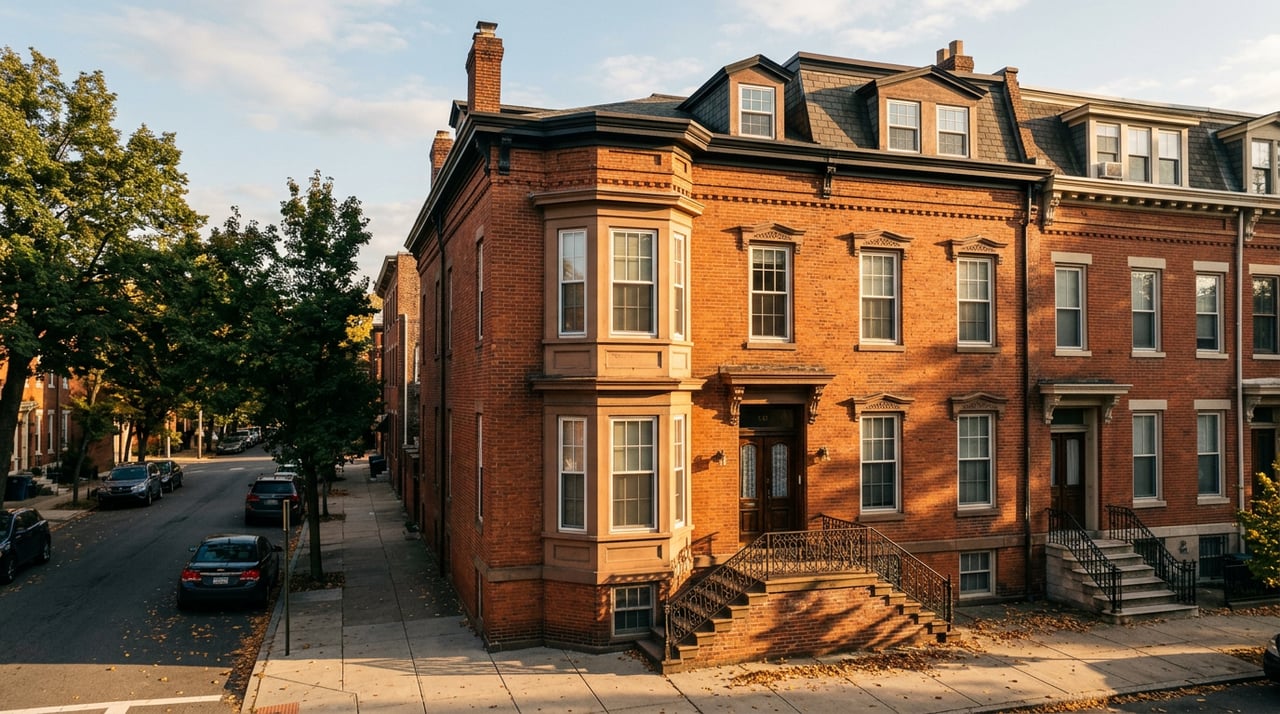
"Amidst an ongoing housing crisis, we must act to protect our residents," Mayor Katjana Ballantyne said when Somerville's updated Condominium Conversion Ordinance took effect on October 1, 2025. For tenants, that sentence describes new protection. For the owner of a Somerville two-family or triple-decker weighing a condo conversion, it describes something else: a set of numbers you priced your deal around that no longer apply, and a set of numbers you're pricing around now that may not hold either.
That's the piece most conversations about Somerville's ordinance skip. The October changes get treated as a one-time update, something to note and move past. They're not. This ordinance has been rewritten repeatedly since 1985, and as of this summer, the city council was already negotiating the next version. If you're a small owner thinking about converting rental units to condos, or buying a multi-family with that exit in mind, the rule you're reading today is a snapshot, not a fixed point.
What actually changed last October
Two things moved, and both cost owners more time and money than the version of the ordinance that came before.
| Before Oct 1, 2025 | After Oct 1, 2025 | |
|---|---|---|
| Notice to the Condominium Review Board before converting a vacant, formerly-tenanted unit | 1 year | 2 years |
| Relocation payment, standard tenant | $7,546 | $14,000 |
| Relocation payment, enhanced-protection tenant (senior, disabled, low/moderate income) | $12,577 | $18,000 |
The relocation figures are also indexed to the Consumer Price Index going forward, according to the city's own announcement, so even these "new" numbers will drift upward every year rather than sit still.
None of this touches the notice periods for units that are still occupied when an owner applies, which is a separate and older part of the ordinance. Standard tenants still get one year's notice. Tenants who qualify as elderly, disabled, or low and moderate income are entitled to up to five years, a provision the Condominium Review Board's own FAQ describes as unchanged by the 2025 update. So a triple-decker with one long-term senior tenant in it isn't looking at a two-year timeline. It's looking at a five-year one, on top of whatever relocation payment applies when that tenant eventually leaves.
The rule that hasn't finished changing
Here's the part that doesn't show up in most summaries of the October update: the city council was back in session on July 10, 2026, discussing further amendments to the same sections of the ordinance, specifically 7-64, 7-65, and 7-68. According to a public recap of that meeting, councilors described the goal as closing a procedural loophole that had let owners displace tenants before relocation protections technically applied, the kind of timing gap a motivated seller might otherwise use to sidestep the payment altogether. Councilor Davis and the legislative working group called the new language "substantively the same" as what committee had already reviewed, but the item was tabled, not passed, pending further review and coordination with the city clerk's office.
As of this writing, that amendment has not taken effect. It may not survive in its current form. But the pattern is now impossible to ignore: 1985 original ordinance, a 2019 revision that extended coverage to smaller 2 to 4 unit buildings and set the five-year notice standard for protected tenants, a court challenge that forced the city to abandon its own claimed right of second purchase on converted units, the October 2025 relocation and notice changes, and now a fresh round under discussion less than a year later. Somerville amends this ordinance roughly every two to three years. A conversion that takes two to five years to clear, which is what the current notice periods require for many buildings, will very likely cross at least one more amendment cycle before it closes.
That's the thesis worth sitting with if you're penciling out a Somerville conversion: the rules you start under and the rules you finish under are not guaranteed to be the same rules.
Why the paperwork matters more than it looks like it should
The Condominium Review Board is a five-member body, two homeowners, two tenants, and one elderly, handicapped, or low-to-moderate income resident, appointed by the mayor and confirmed by the council. It meets monthly, and it's not a rubber stamp. Applications are due weeks ahead of each hearing date, and if you currently have tenants, or have had any in the past 12 months, the board requires at least two weeks' notice to them before your hearing can proceed. The city's own guidance tells owners to submit paperwork at least three weeks out specifically so tenant notice doesn't force a delay to the following month's meeting. Miss that window and your application doesn't fail, it just waits another month, which on a multi-unit building with staggered tenancies can compound quickly.
None of this is exotic bureaucracy invented to punish landlords. It's the mechanism by which the city verifies protected-tenant status and confirms relocation payments were made, and it's slower by design than it used to be.
The economics underneath the paperwork
Somerville's small multi-family stock is not a niche corner of the market. The city's 2025 housing needs assessment found that roughly 27.7 percent of housing units are in duplexes and another 26.8 percent are in three or four unit buildings, meaning just over half the city's housing, about 54.5 percent, sits in this exact category the conversion ordinance regulates.
That scale is also why conversion optionality matters more in Somerville than pure rental yield does. One investment analysis published this spring put stabilized Somerville multifamily cap rates at 3 to 4 percent, compressed by strong transit-driven demand near the Green Line Extension stations, compared with 4.5 percent or better in Brookline, where the same analysis flagged condo conversion as a distinct strategic advantage available to owners there. In a market where the rental income alone barely clears financing costs, the spread between a whole-building sale price and the sum of individually sold condo units is often the actual return an owner is underwriting. The ordinance sits directly on top of that spread, adding years to the timeline and tens of thousands of dollars in mandatory payments before an owner ever reaches closing on the first unit.
What this means if you're weighing a conversion or a sale
If you already own a small multi-family here and a conversion is part of your long-term plan, model the slowest applicable notice period, not the fastest. A building with any tenant who could qualify for enhanced protection should be underwritten assuming a five-year runway on that unit, not the two-year figure that applies to a vacant one. Build the relocation payments into your budget at today's figures with room for annual CPI increases, and check the Condominium Review Board's own site before you file anything, since a second round of amendments was still moving through committee as of this summer.
If you're evaluating whether to sell your building outright instead of converting it, understand that a buyer with a conversion strategy is underwriting the same timeline and cost risk you would be, which affects what they can reasonably offer. And if you're comparing Somerville to a neighboring market like Brookline for a multi-family purchase, the conversion math, not just the purchase price, is part of what's different between the two.
None of this is legal advice, and an attorney who works regularly with the Condominium Review Board is worth the fee before you file anything. What a local advisor can do is help you see how the timeline and the numbers interact with your specific building, your specific tenants, and what you're actually trying to accomplish with the sale.
A few questions this raises
Does the October 2025 change affect a conversion permit I already filed before that date? The city's announcement describes the new relocation and notice figures as taking effect for the process going forward from October 1, 2025. Anyone with an application already in the pipeline should confirm directly with the Condominium Review Board how their specific filing was treated.
Does this apply if I plan to live in one unit myself? The ordinance regulates the conversion process itself, not just non-owner-occupied buildings, and tenant protections attach to any tenant living in a unit at the time the owner forms intent to convert, regardless of whether the owner occupies another unit in the same building.
Is the July 2026 amendment now the rule? No. As of this writing it had been tabled for further council review, not adopted. Anyone timing a conversion around it should check the Condominium Review Board's current published ordinance rather than assuming the proposed language is final.
If you're trying to figure out what a Somerville two, three, or four unit property is actually worth today, either to convert, to hold, or to sell as-is, that number is the starting point for every decision above it. Charles Haritos works with small owners and investors across Somerville and the surrounding neighborhoods on exactly this kind of decision. Get your instant home valuation to see where your building stands before you commit to a timeline.